The Heart-Shaped Sunglasses Club
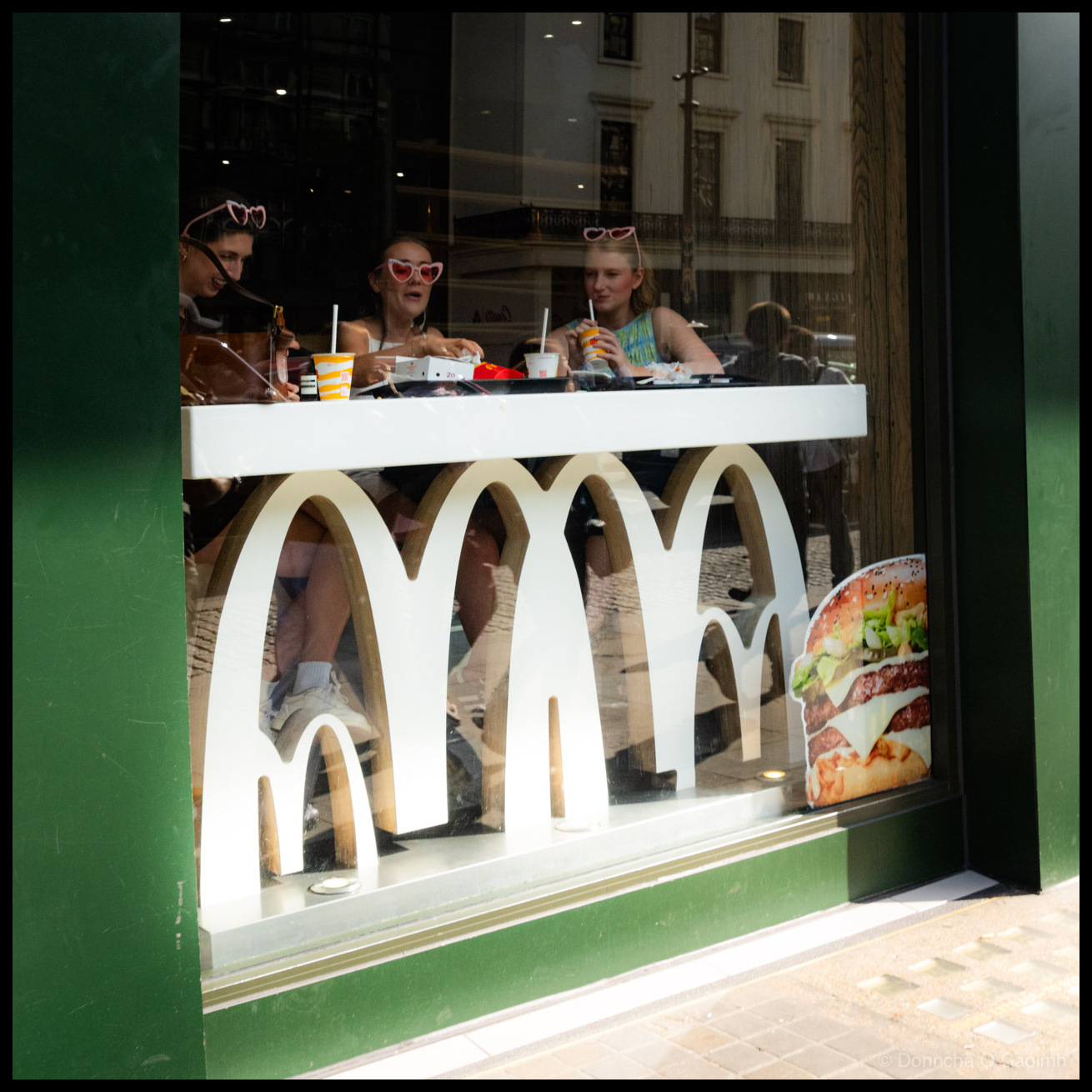
A McDonald’s in London was the restaurant of choice for 3 ladies wearing identical heart-shaped sunglasses on this July day earlier this year. They were sitting in the window, above the McDonald’s arches. I couldn’t resist photographing them. McDonald’s restaurants in Europe, including the UK, use dark green exteriors rather than the bright red and…
Spinning Light on Grand Parade
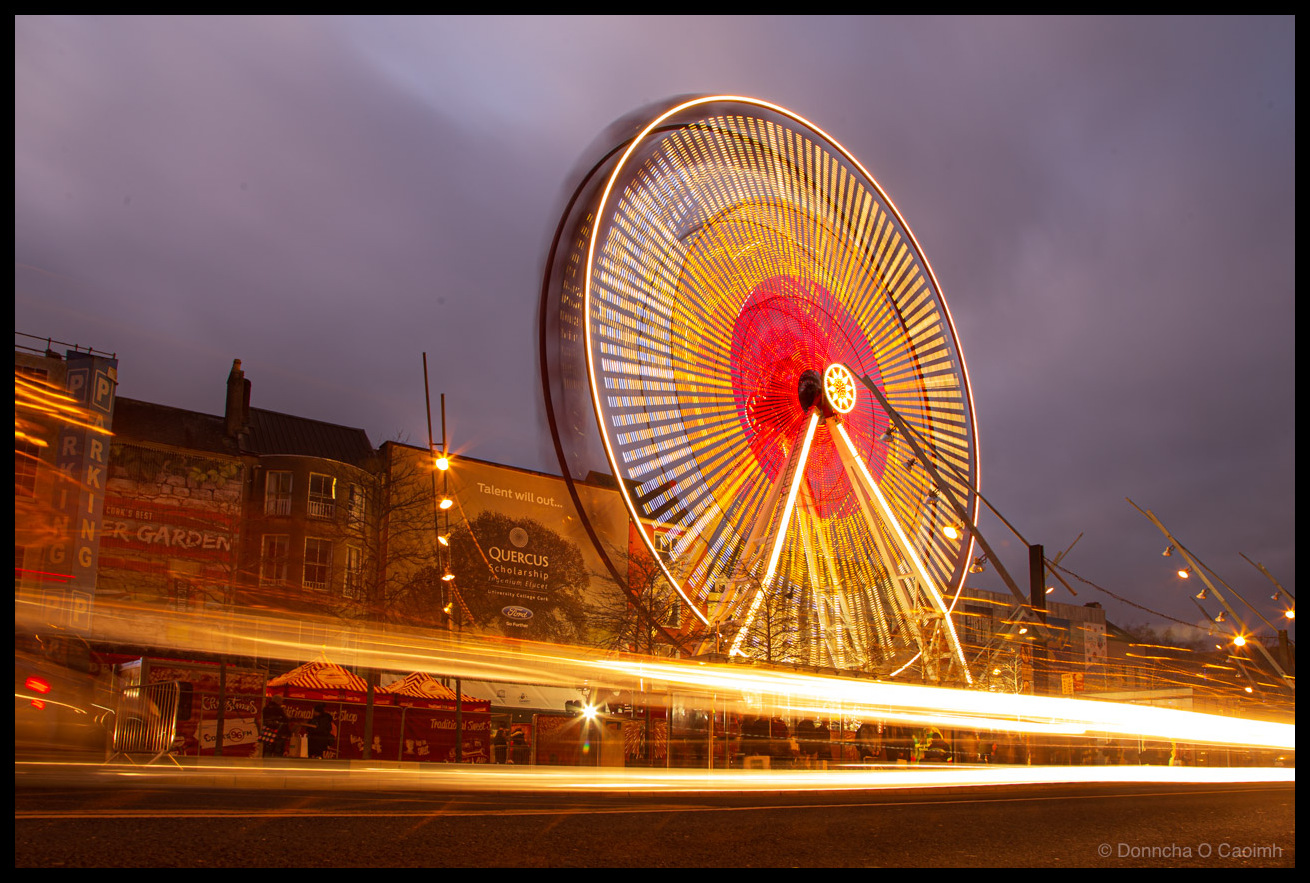
The Big Wheel or Ferris wheel, is back in the Grand Parade in Cork, but these photos are from December 2017! You’d hardly know, except for the posters on the buildings behind. This was before Ukraine was attacked by Russia and there is now a flag of Ukraine with the text, “We’re with you Ukraine”…
Chasing Light Trails on South Mall
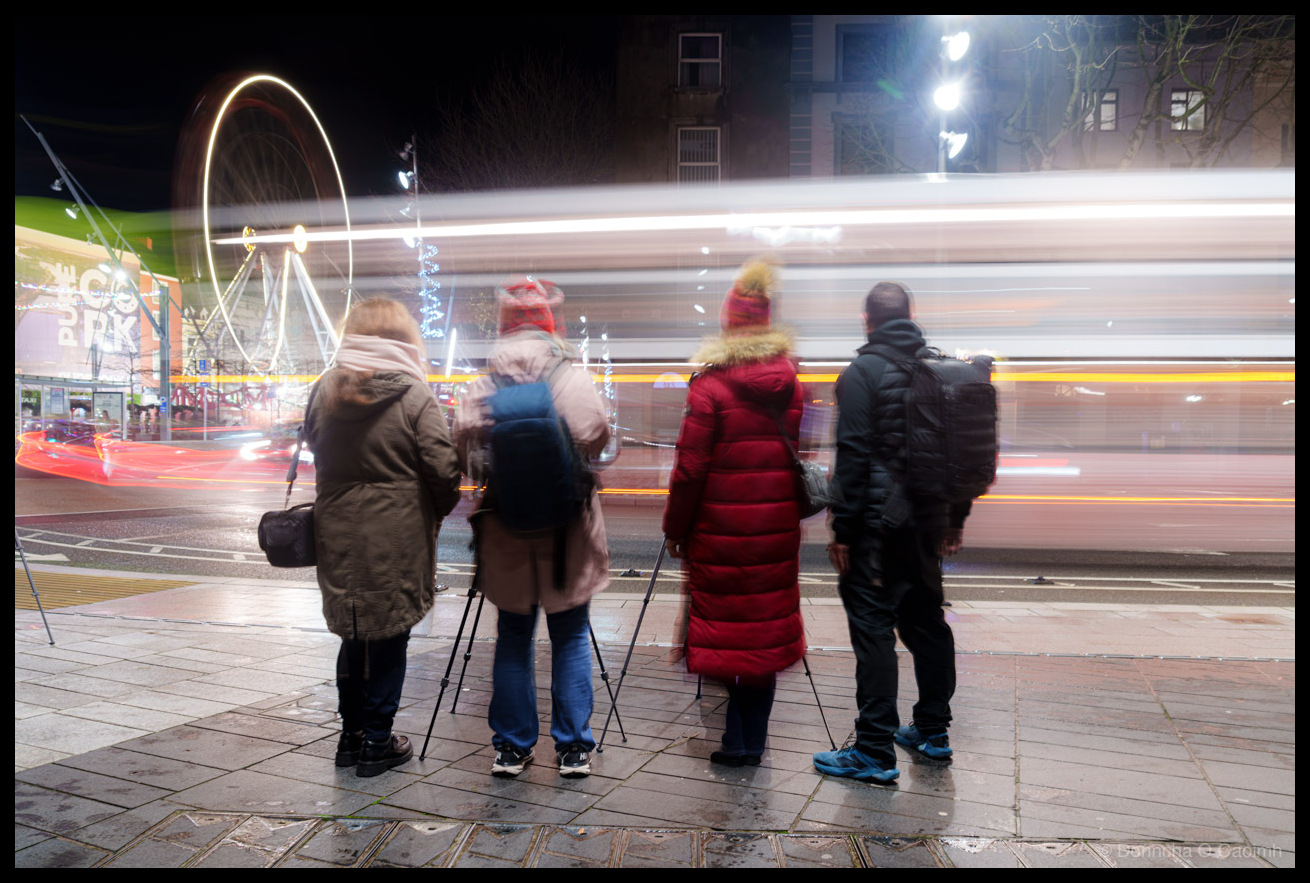
You’re not waiting for a bus and suddenly four busses come along! We had fun with some long exposure photography on. Thursday night.
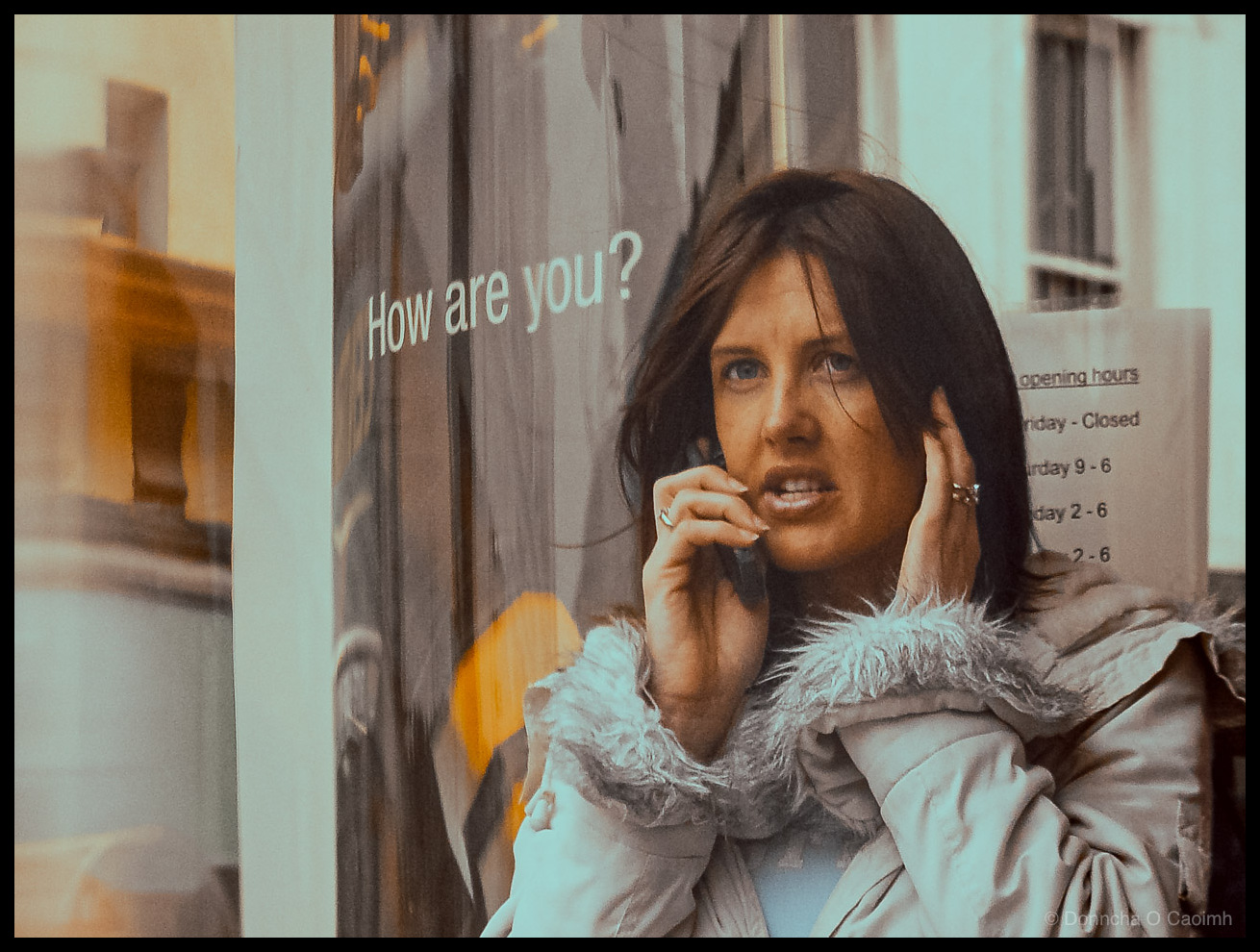
How are you?
I would like to say I knew the sign in the background said, “How are you?” but it’s more likely I did not. I’m glad it worked out, and it just proves that you have to be ready to take the photograph when you’re doing street photography or you’ll miss the moment. In 2004, Ireland…
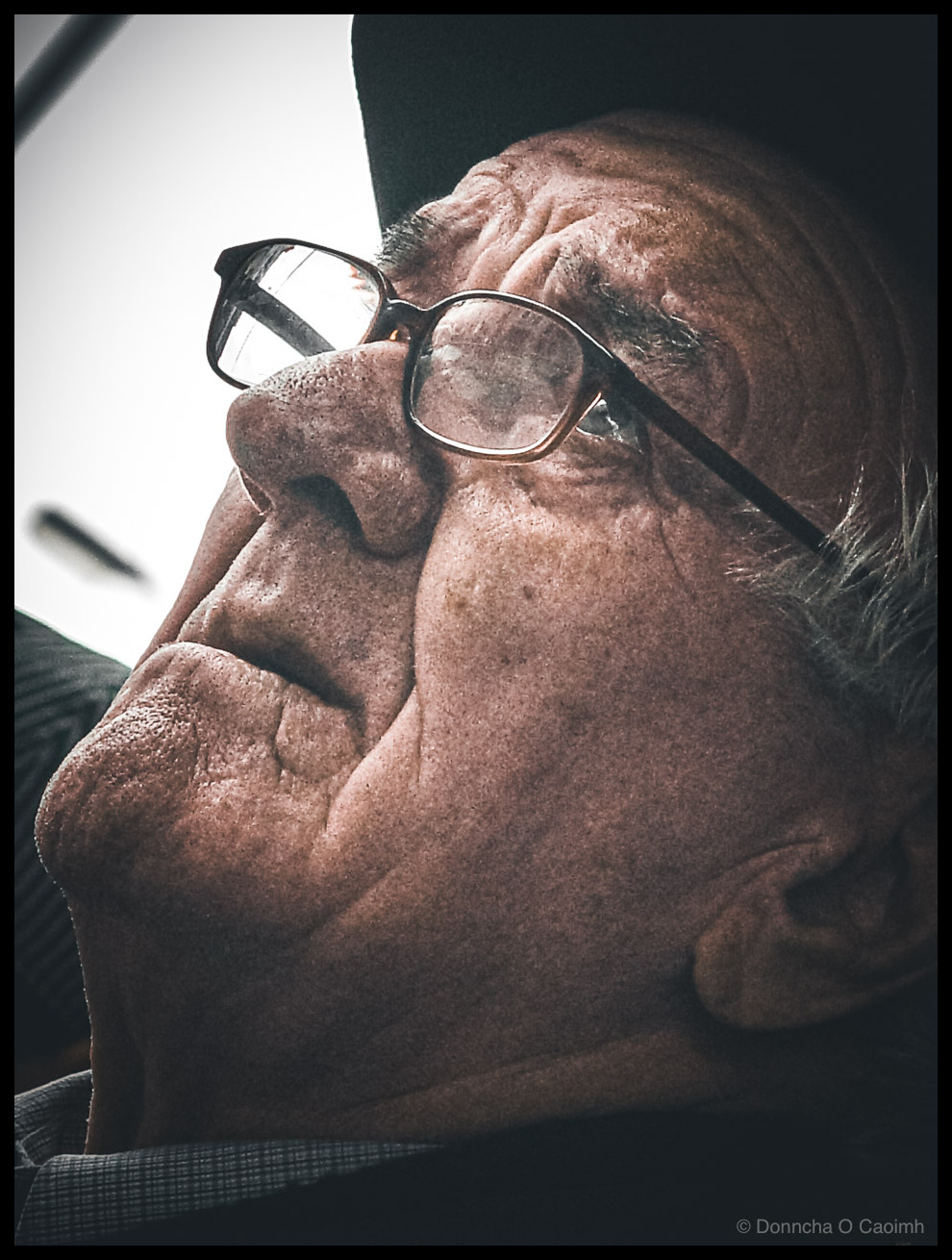
A Life Well Lived
Portrait of a man outside a coffee shop on Daunt Square, Cork, in 2004.
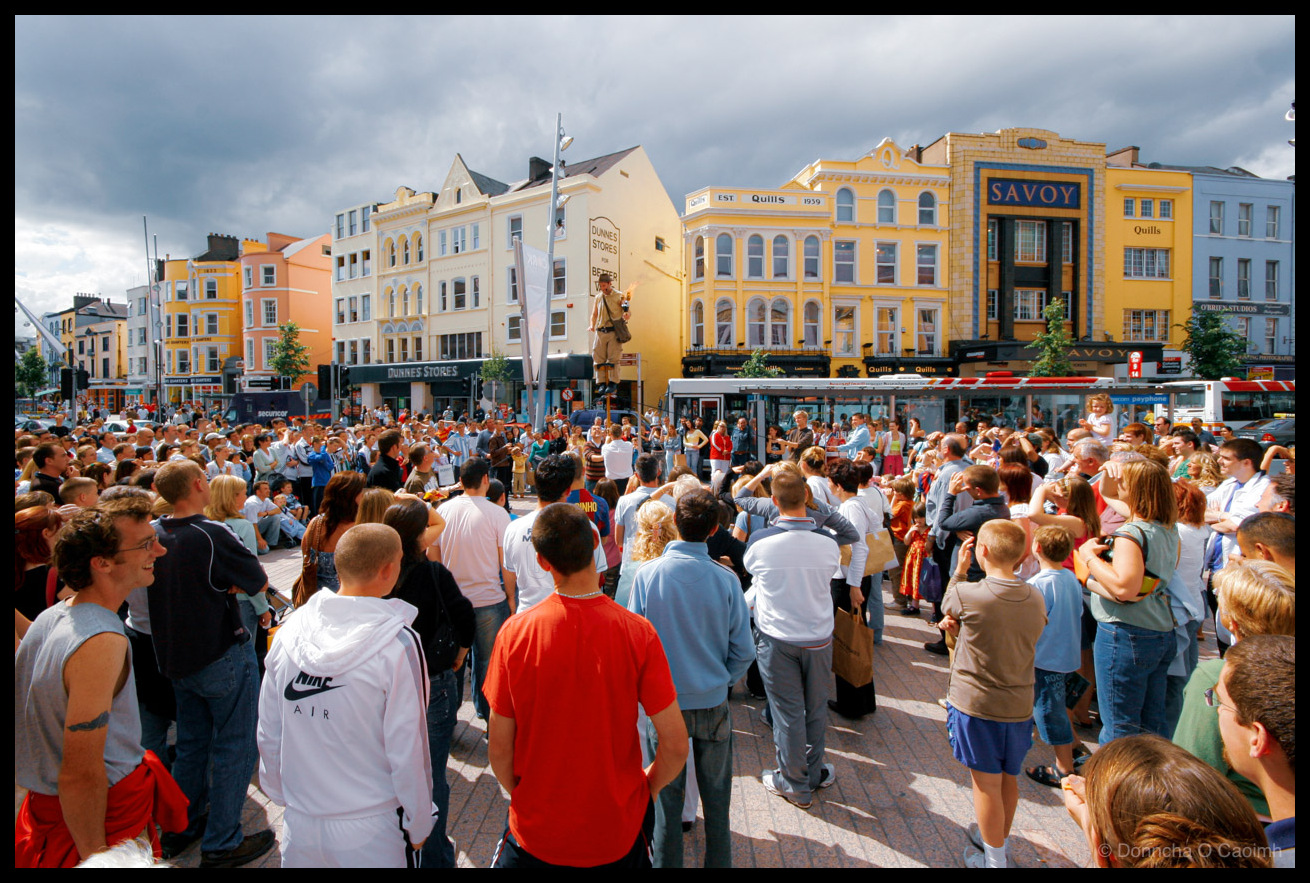
The Crowd on Pana
A huge crowd gathered around a man on stilts holding 3 flaming torches on St. Patrick Street, Cork in 2006. See how homogeneous the crowd is? A similar photo today would show a much more diverse set of people in modern Ireland. Edit: Since this caused quite a commotion on Facebook, I just want to…
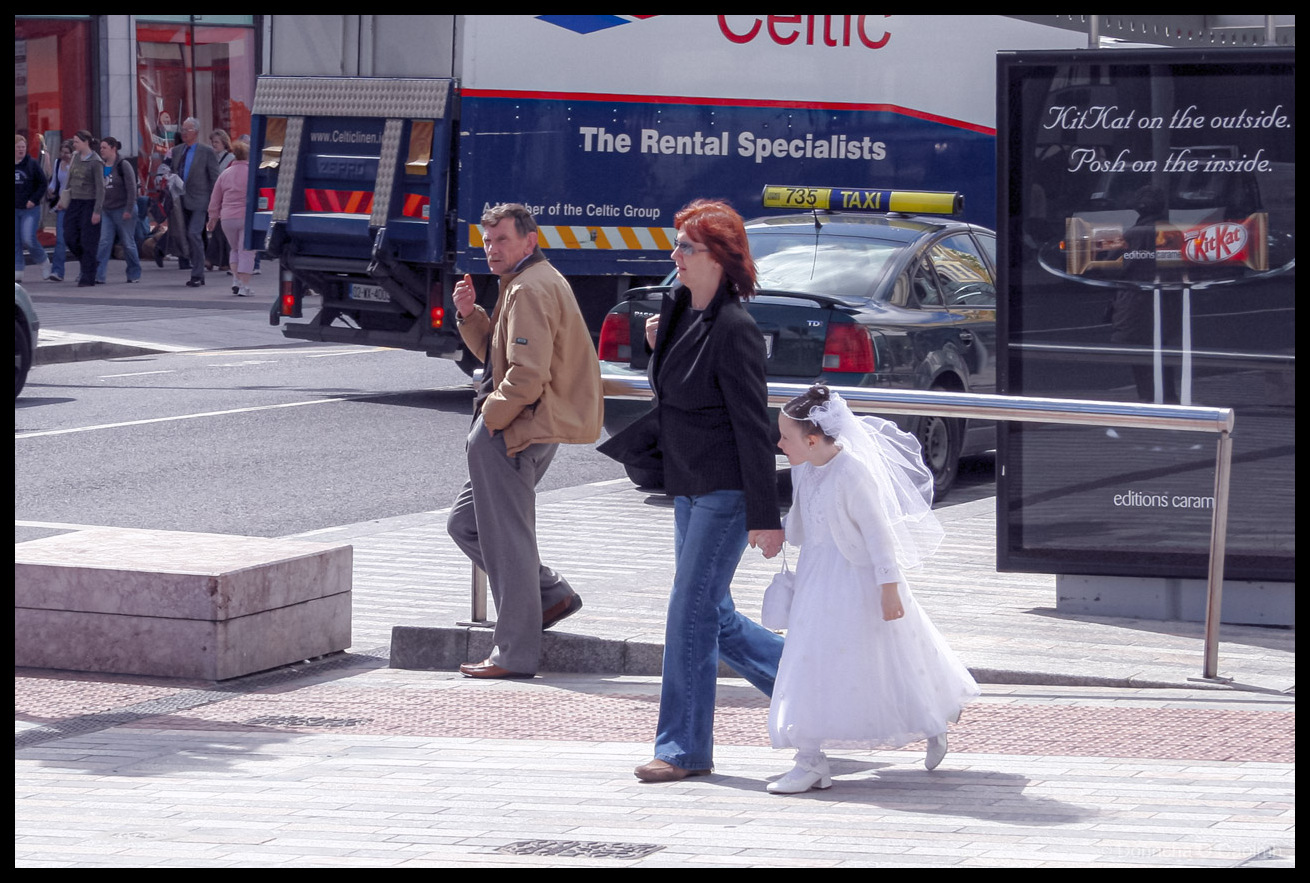
Communion Day on Patrick Street
This was twenty years ago on St. Patrick Street, Cork. Not in December obviously, but in May when children all over the country were celebrating their first communion.
Marching for Housing
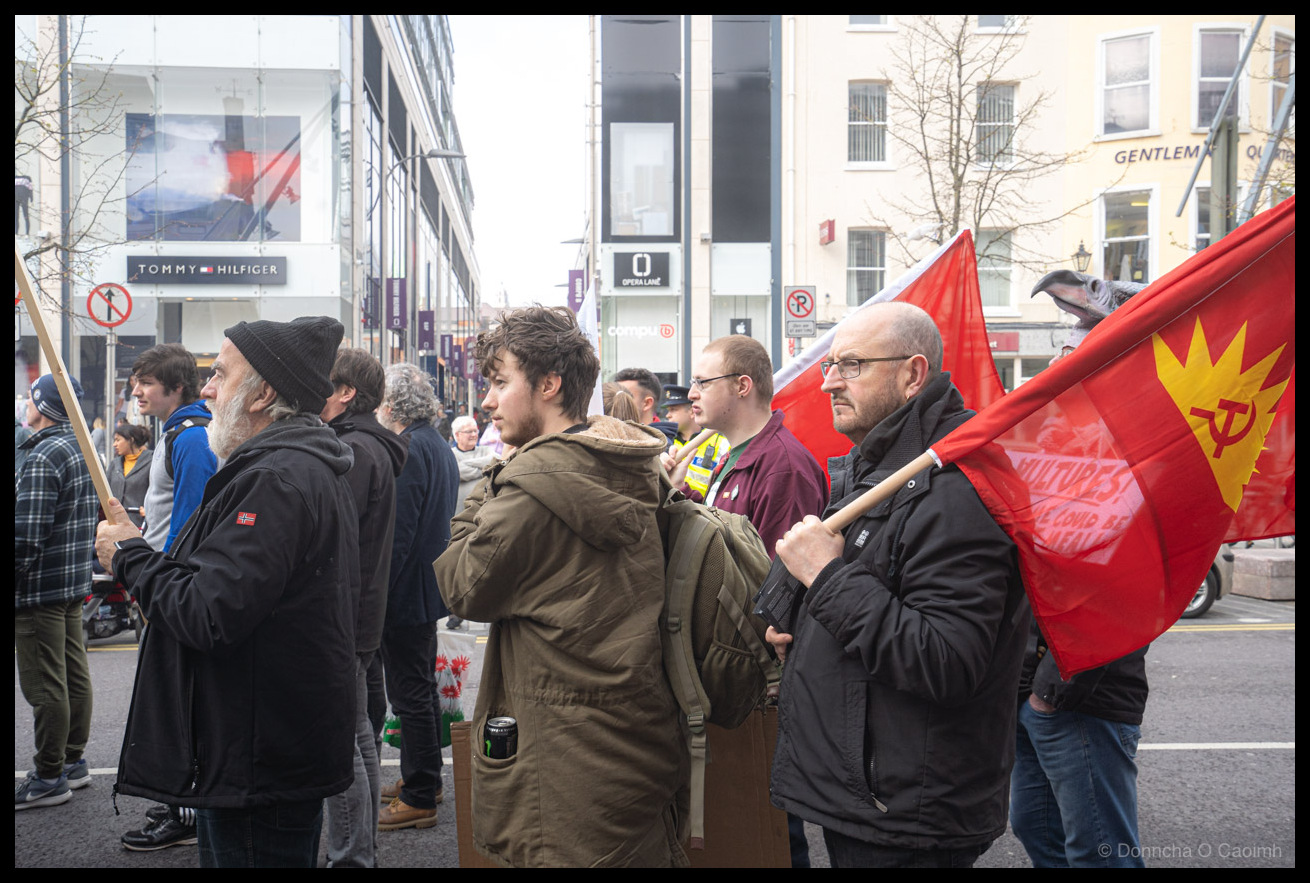
Protesting the housing crisis in Cork in 2019. We still have a housing crisis.
Surfing in Munich
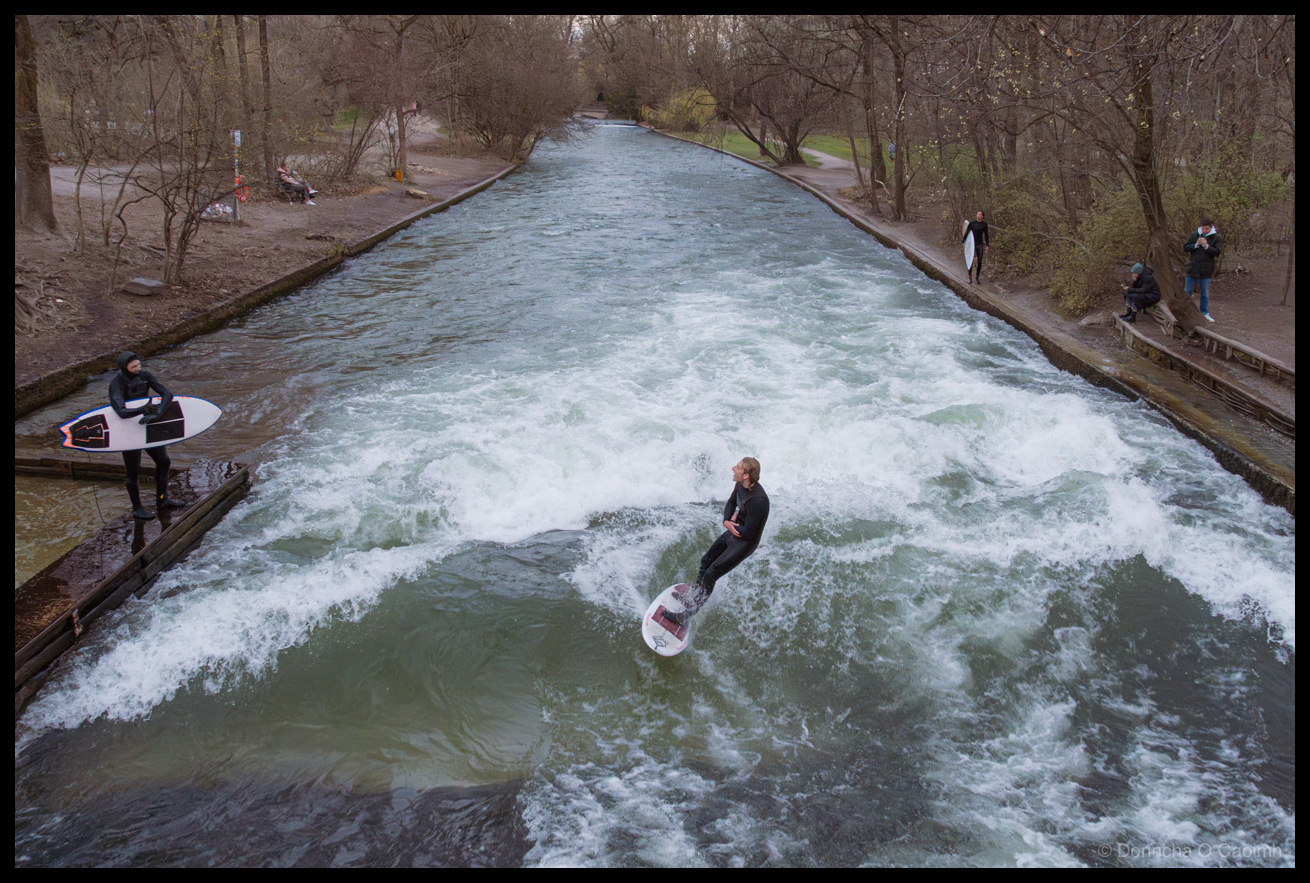
Surfers on the Isar or Eisbach canal in Munich, Germany. It was bizarre seeing people surfing in the middle of a city but the river was perfect for it. Unfortunately, the wave seems to have disappeared recently and they don’t know why.
The Boat Cove Boys
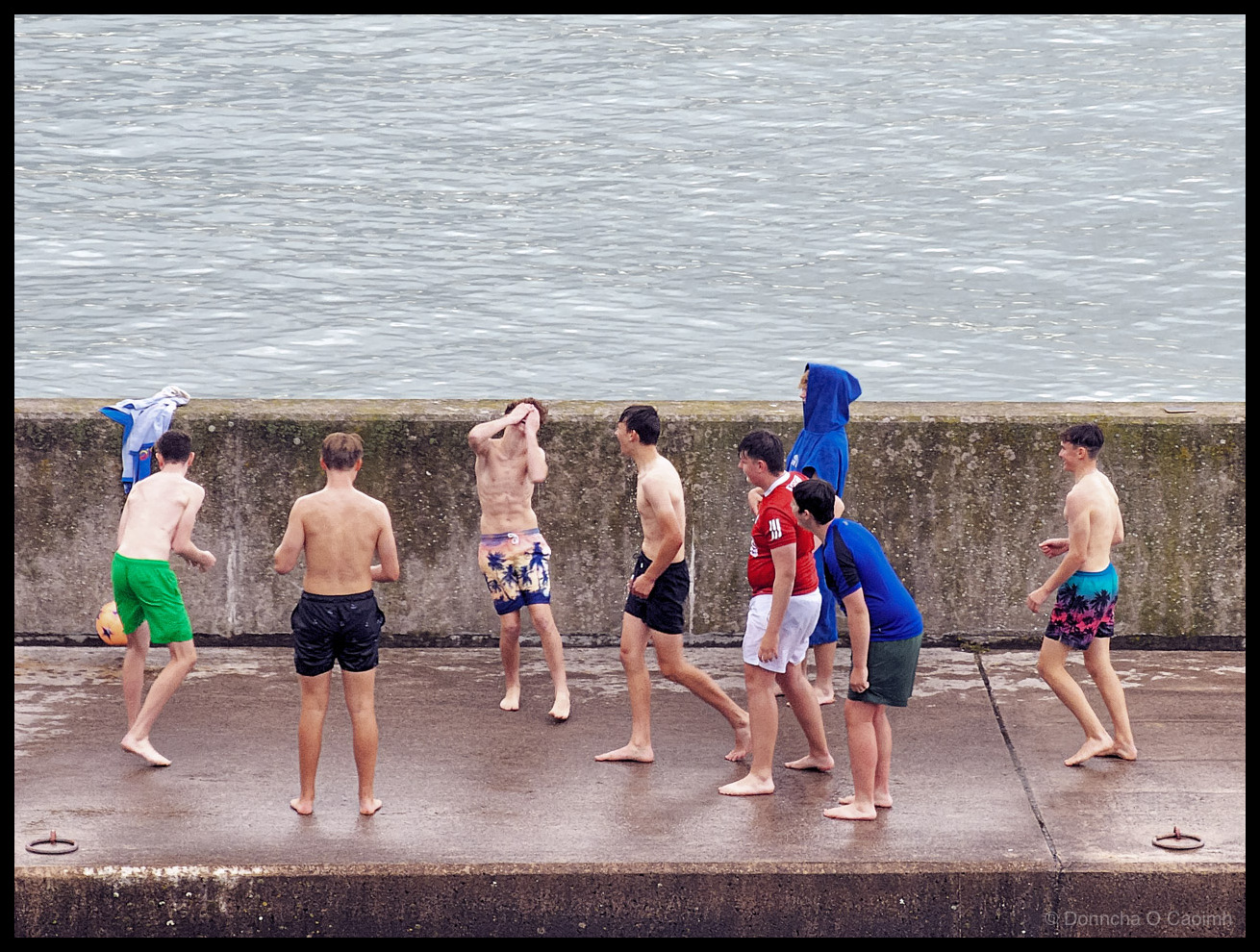
In the middle of July when Ireland was moderately warm and the sea was, if not warm, ok to swim in for a few minutes at a time. A bunch of lads were jumping off the pier at Ardmore Boat Cove, but when we walked by, they were playing football and I think one team…
The Swan Whisperer of Galway
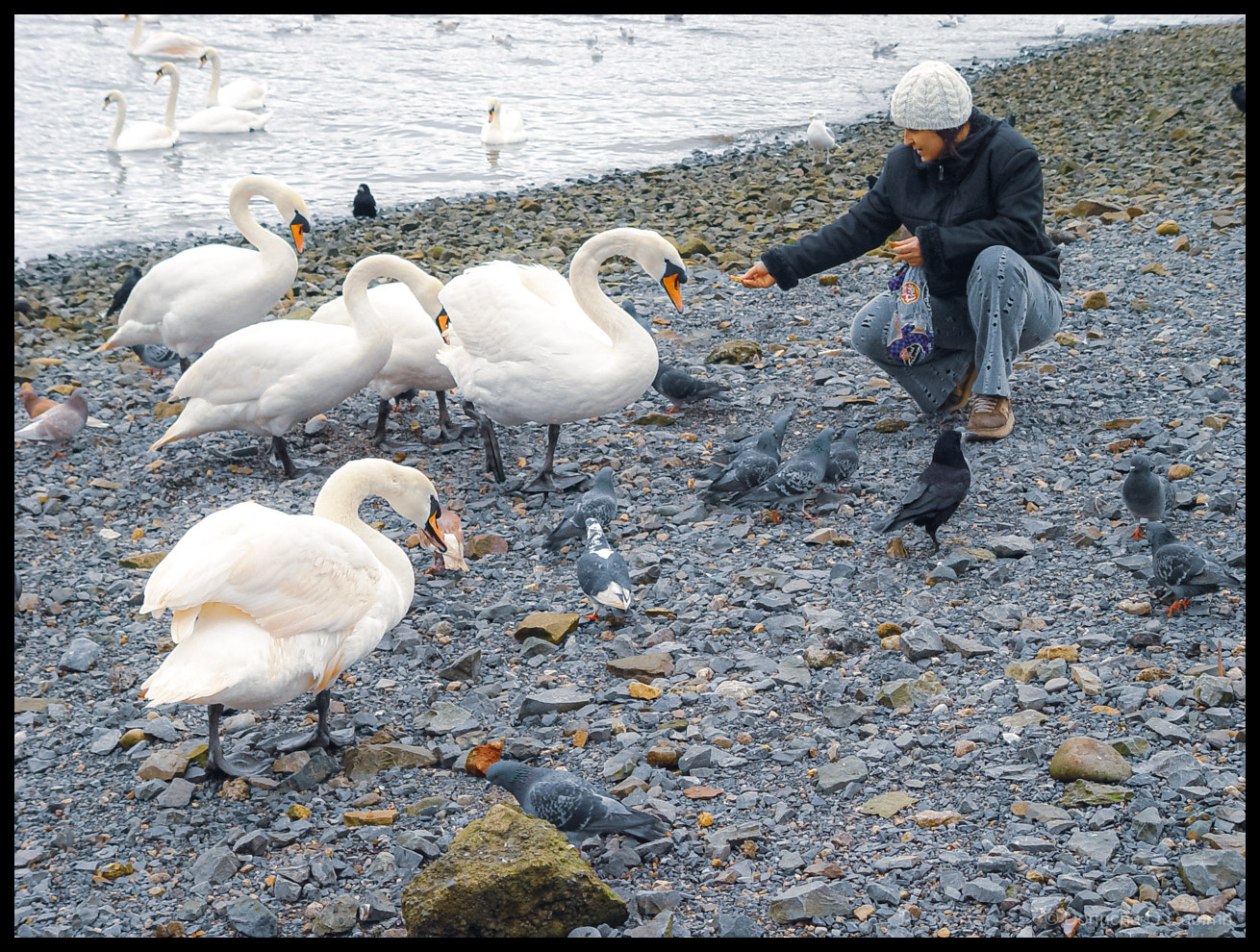
If you’ve ever wandered down to the Claddagh in Galway, you’ll know the swans are less “graceful wild creatures” and more “assertive locals who know exactly when the bread’s coming out.” That’s what happened on this day in 2005 when we visited and saw a young woman feeding those swans. Other birds wanted crumbs of…
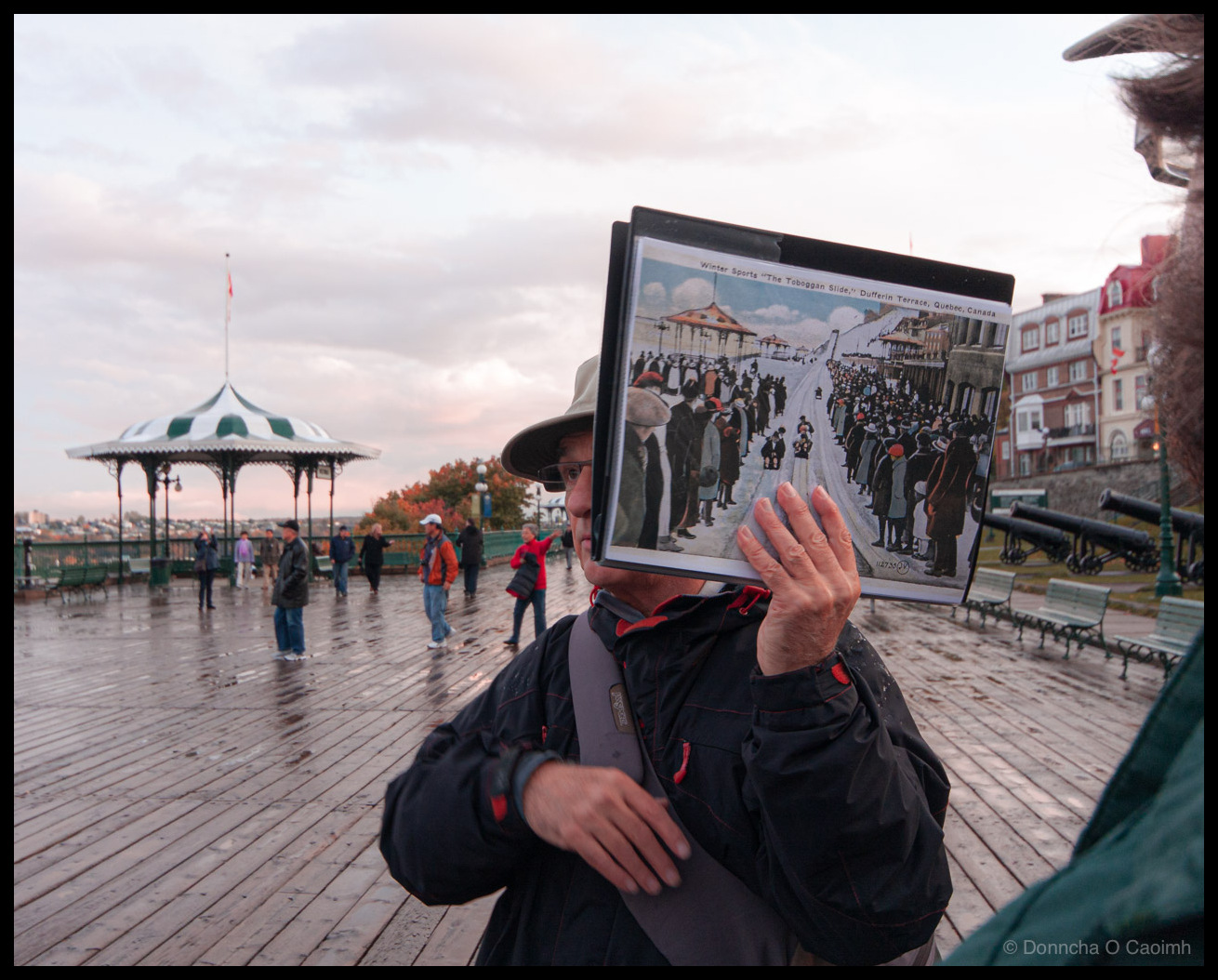
Then and Now on Dufferin Terrace
I haven’t been back to Canada in many years but 2009 was my first visit there and we stayed near Quebec and took a tour of the city on a wet and cloudy autumn day.