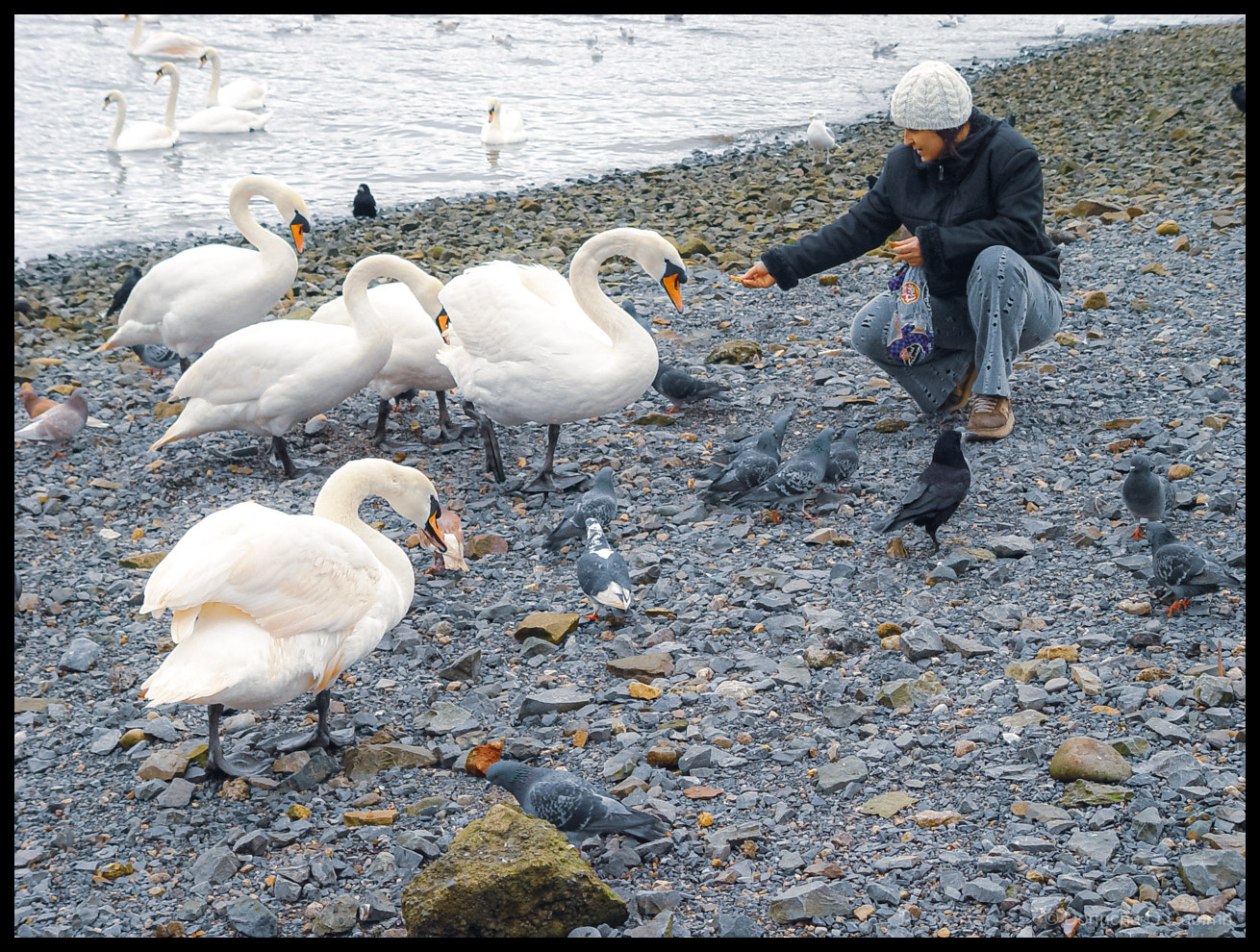
If you’ve ever wandered down to the Claddagh in Galway, you’ll know the swans are less “graceful wild creatures” and more “assertive locals who know exactly when the bread’s coming out.”
That’s what happened on this day in 2005 when we visited and saw a young woman feeding those swans. Other birds wanted crumbs of bread too! Now we know that bread is not an ideal food for birds. Green vegetables are better for them.
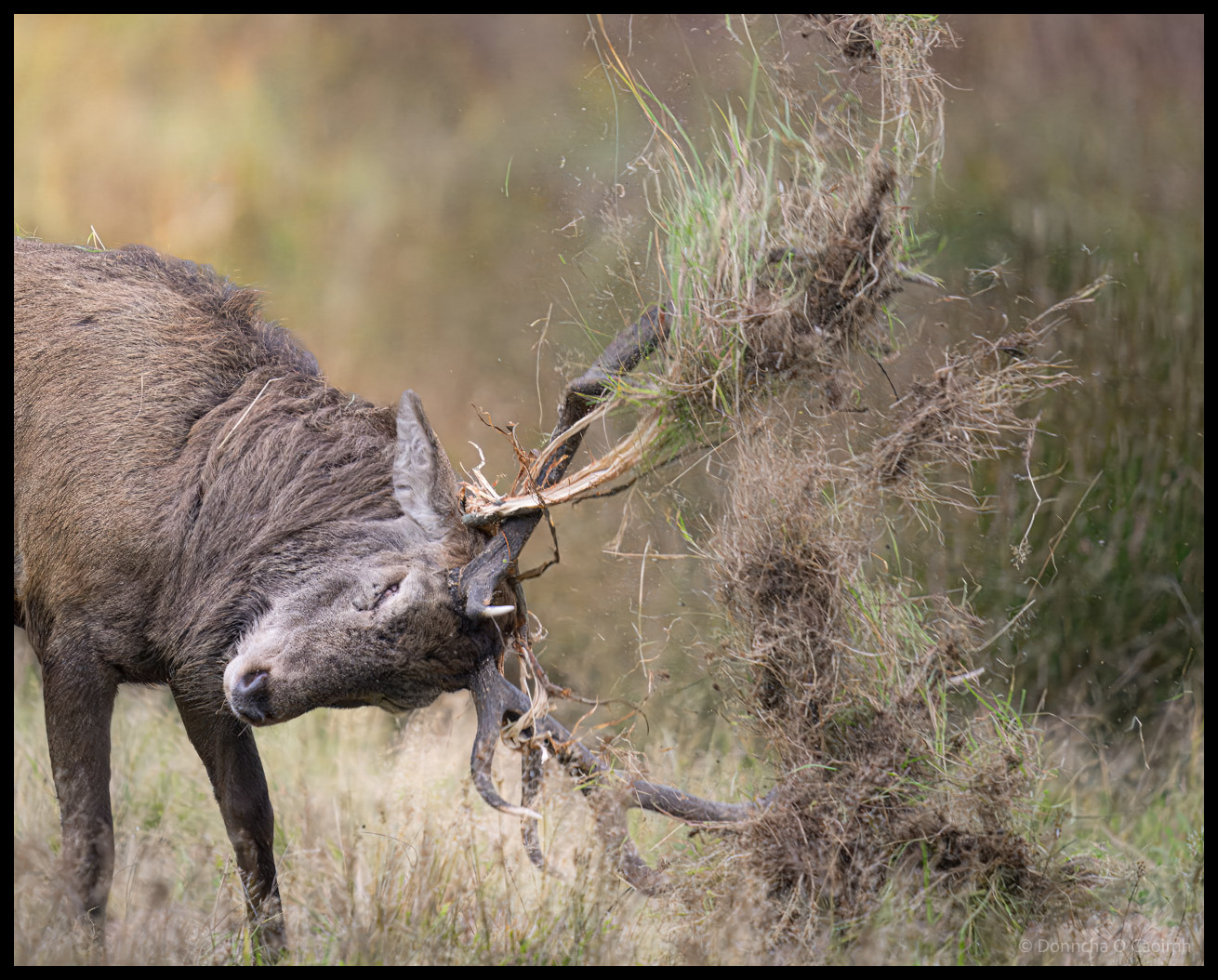
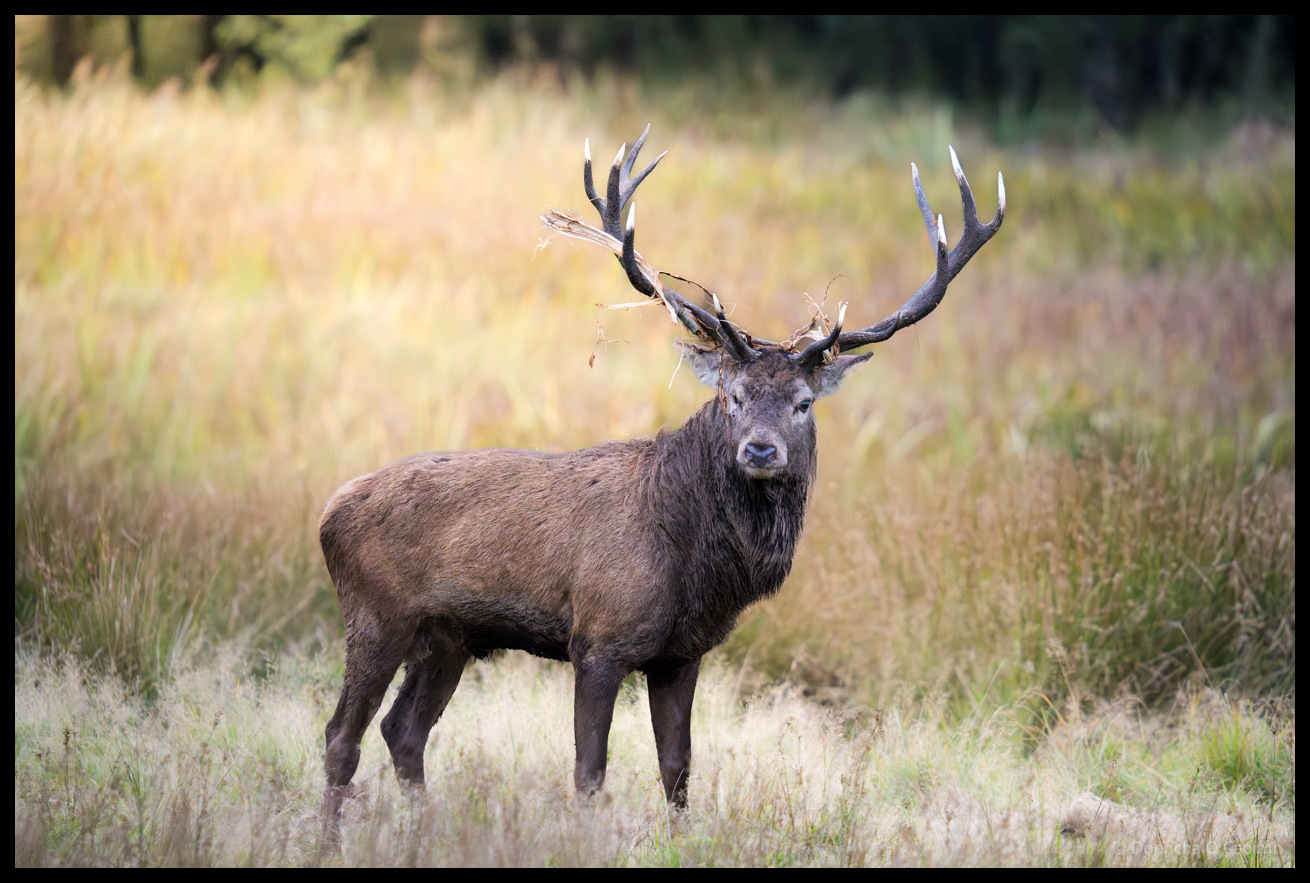
A stag digs up the grass to decorate his antlers in Killarney National Park a few weeks ago.
Antler entanglement with vegetation is a common occurrence during the red deer rutting season and is primarily caused by a behaviour called “thrashing,” where stags violently shake their antlers against trees, shrubs, and ground vegetation. This behaviour serves multiple purposes: it helps remove the dried velvet that covered growing antlers earlier in the season, it deposits scent from glands near the eyes onto vegetation to mark territory, it demonstrates strength and aggression to rival males, and it creates visual displays that attract females. During peak rutting activity, stags may thrash vegetation dozens of times per day, and the force involved can uproot small plants entirely, strip bark from trees, and break substantial branches. The Irish name for red deer, “fia rua,” literally means “red deer,” and historical Irish texts frequently reference the autumn roaring season when stags’ bellowing calls could be heard echoing across valleys. The physical demands of rutting are so intense that stags typically lose 10-20% of their body weight during the season, as they spend most of their time and energy on reproductive behaviours rather than feeding. Killarney’s native red deer population represents Ireland’s only surviving indigenous red deer herd, genetically distinct from Scottish red deer introduced elsewhere in Ireland, making behavioural observations like this particularly valuable for understanding the ecology of Ireland’s original red deer. The autumn rut typically peaks in October, which means stags spend about 4-6 weeks in this heightened state of activity, after which successful males are often exhausted and in poor condition heading into winter, requiring the entire spring and summer to recover condition for the following year’s rut.
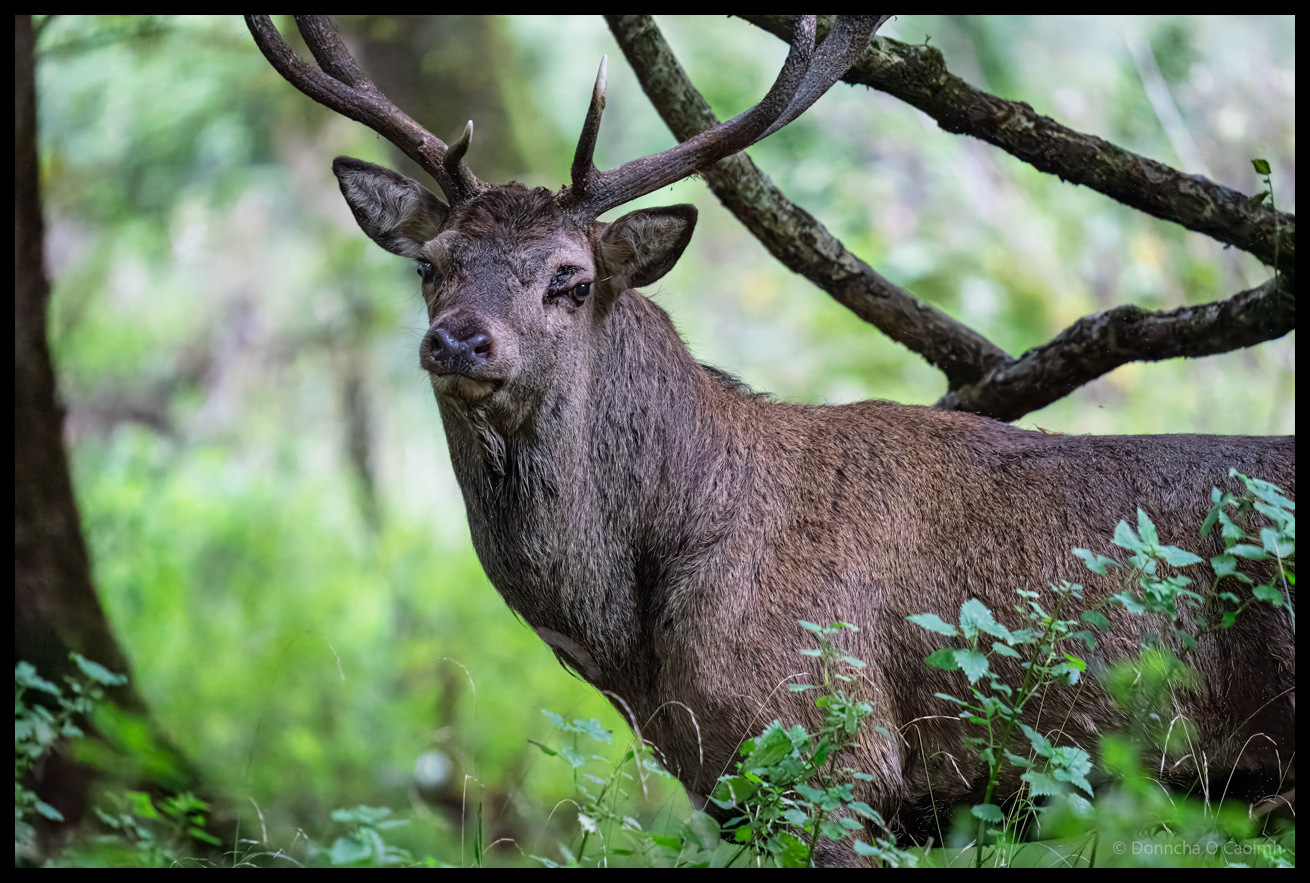
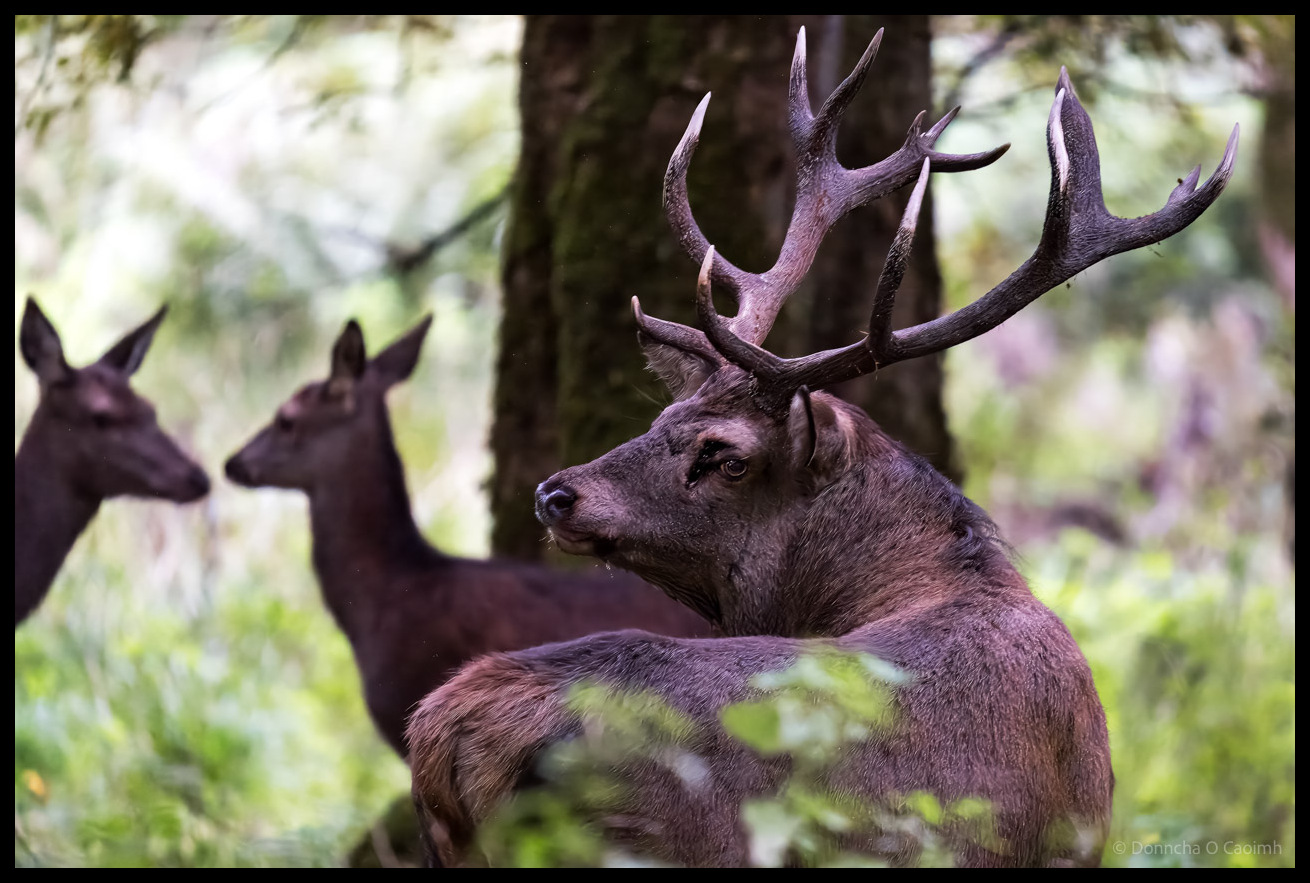
We were lucky to spot this stag and a number of hinds as we entered Killarney National Park a few weeks ago. The light was terrible. It was just after sunrise and we were walking through a wood. I’m thrilled with this photo of a magnificent stag.
Early Saturday morning a few weeks ago we gathered to photograph deer as the sun rose. Walking through the forest in Killarney National Park we spotted a group of deer. The light was terrible. I’m sure this was shot at ISO 12800 to get a crisp image and I’m really happy with it.
This group of deer stayed in the forest away from curious humans for the rest of the morning, though we could hear this stag bellowing several times off in the distance.
I travelled to Kerry this morning to photograph the rutting in Killarney National Park there. There weren’t many stags to be seen but this fellow was lying in the middle of a field I suspected would have a stag or two. After a few moments he stood up, digging his antlers in the grass and tossed his head from side to side with grass flying everywhere.
Despite the dramatic behaviour, he looked over at the human photographers again and lay down, chewing some grass and ignored us once more.
An Asian hornet was spotted in Cork recently. If they gain a hold in this country it could be very bad news for bumblebees like the one in this photo.
This particular bee had 3 of us surrounding her with cameras trying to photograph her as she fed on the nectar of this little flower.
Aperture
ƒ/8
Camera
ILCE-7RM5
Focal length
240mm
ISO
4000
Shutter speed
1/500s
Close
Ad-blocker not detected
Consider installing a browser extension that blocks ads and other malicious scripts in your browser to protect your privacy and security. Here are a few options.
uBlock Origin is a free, open source, ad blocker for your browser.
Use pi-hole if you have a spare Raspberry Pi on your network.
Set the private DNS settings on your phone to dns.adguard.com to block adverts and trackers.