
Dragon of Shandon’s Spooky Crew
A few more photos of the Dragon of Shandon parade last night. I’ll spread these out over the next few days. You’ll get a proper chance to experience the fun of the night. They’ll all be visible here in the future if you’re coming across this post by itself.
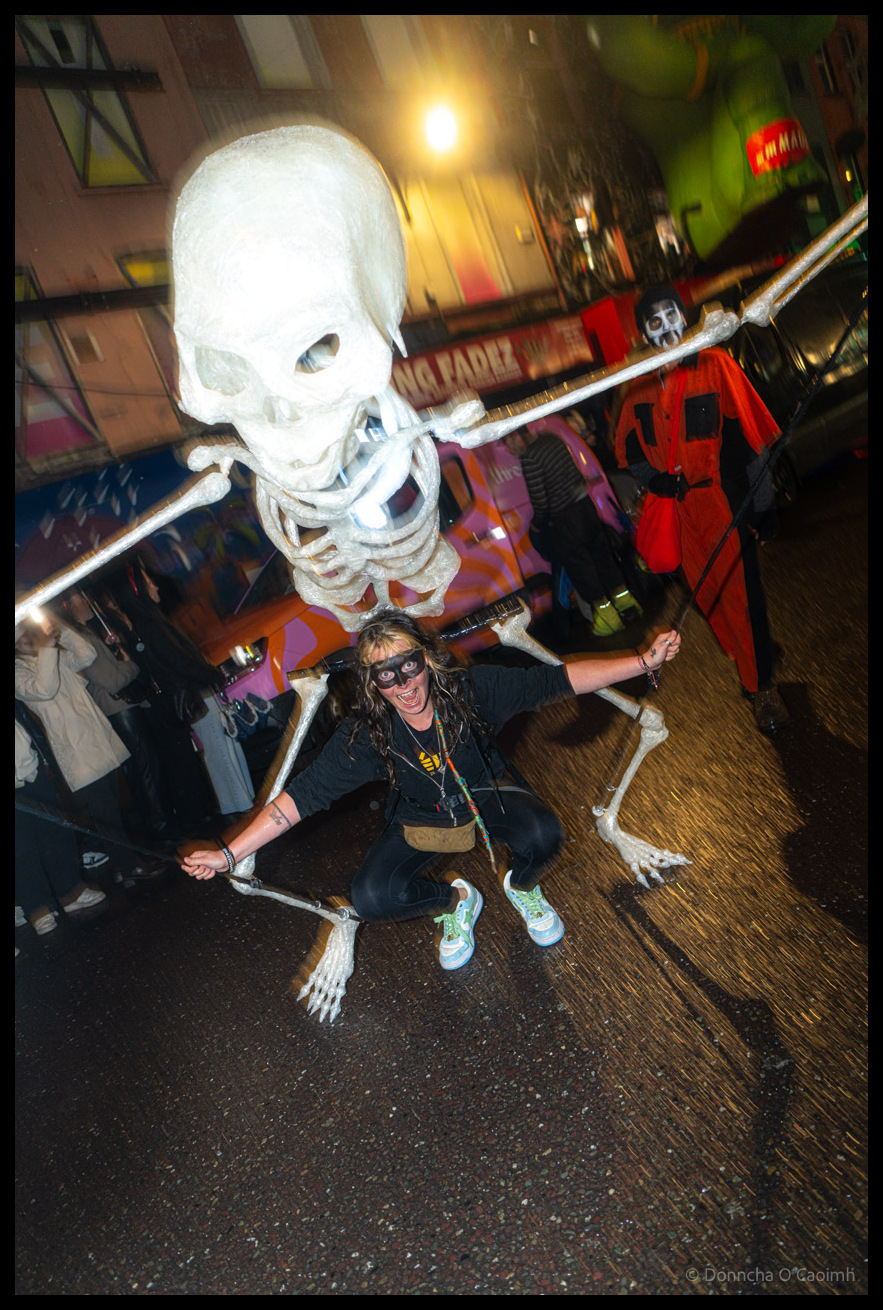
The Big Bones Brigade
One of the fabulous skeleton dancers at tonight’s Dragon of Shandon parade in Cork! What a buzz and atmosphere! Crowds were lining North Main Street where we waited, down Castle Street and then on to Cornmarket Street. Amazing night. Not to be missed next year! More photos to follow when I have time to edit…
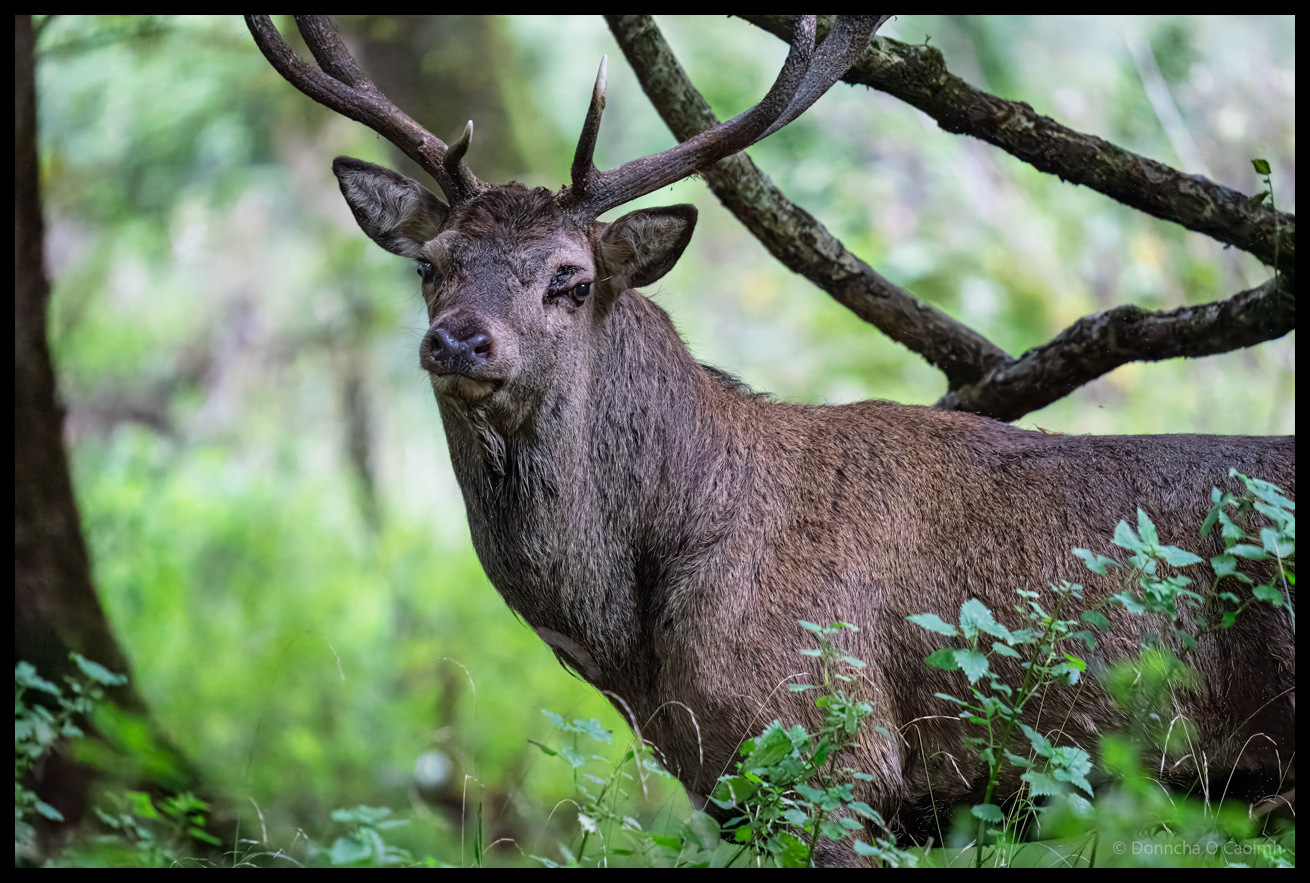
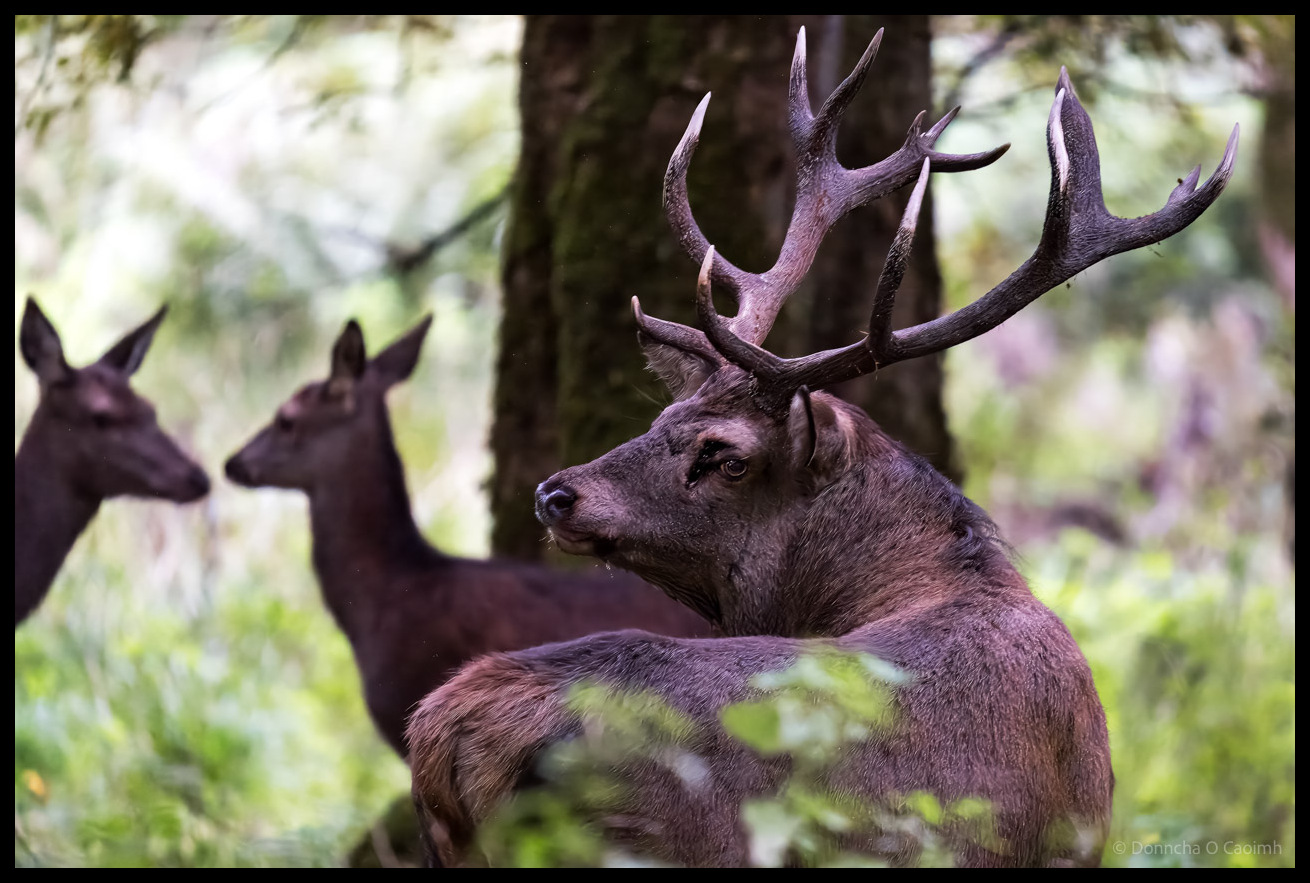
A Killarney Stag’s Portrait
We were lucky to spot this stag and a number of hinds as we entered Killarney National Park a few weeks ago. The light was terrible. It was just after sunrise and we were walking through a wood. I’m thrilled with this photo of a magnificent stag. Here’s another photo of this stag.
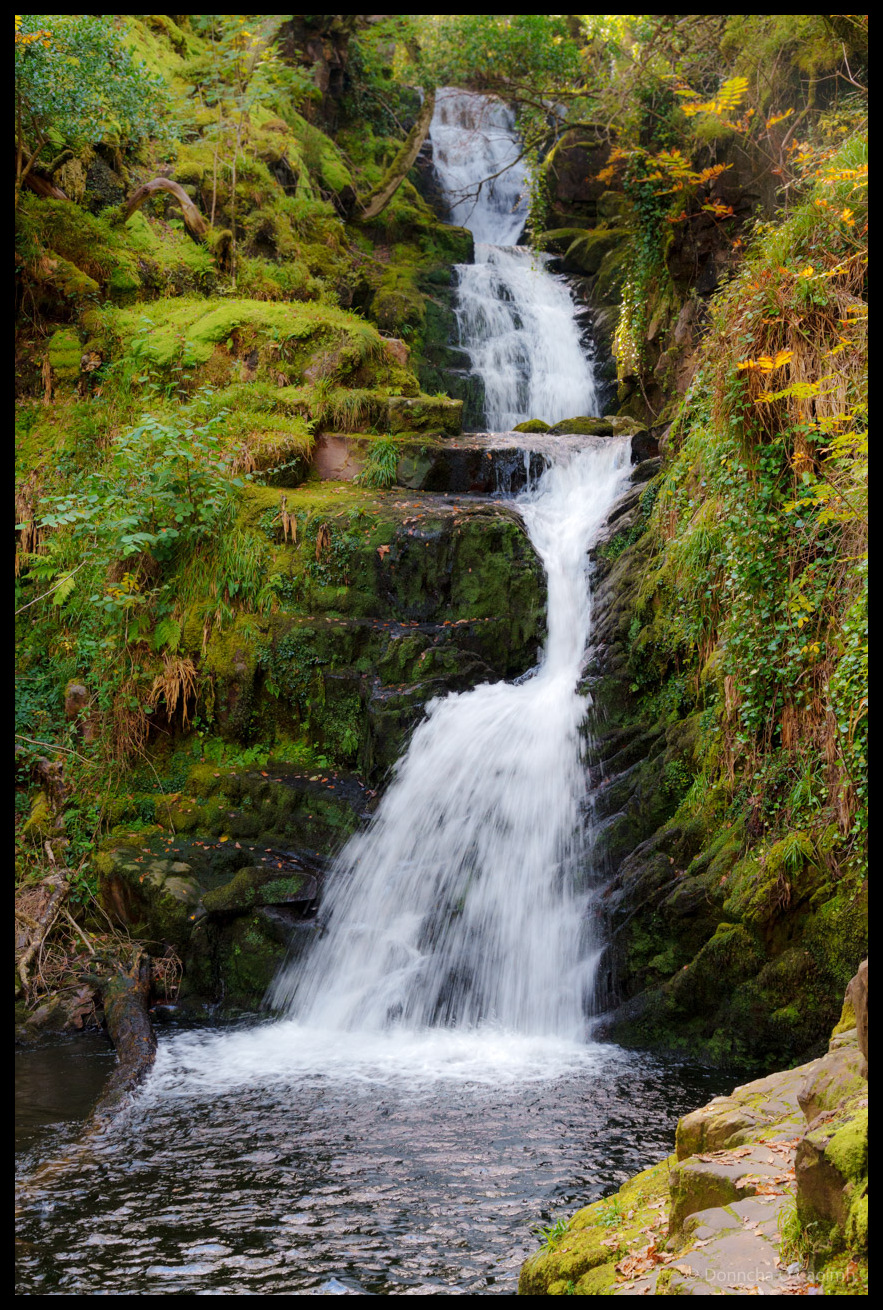
The Tiered Beauty of O’Sullivan’s Cascade
One of the highlights of a recent trip to Killarney was discovering O’Sullivan’s Cascade. There’s a 1.7 km walk from your car to the falls, but it’s worth it as the area is lovely.
A Dog’s Boating Adventure
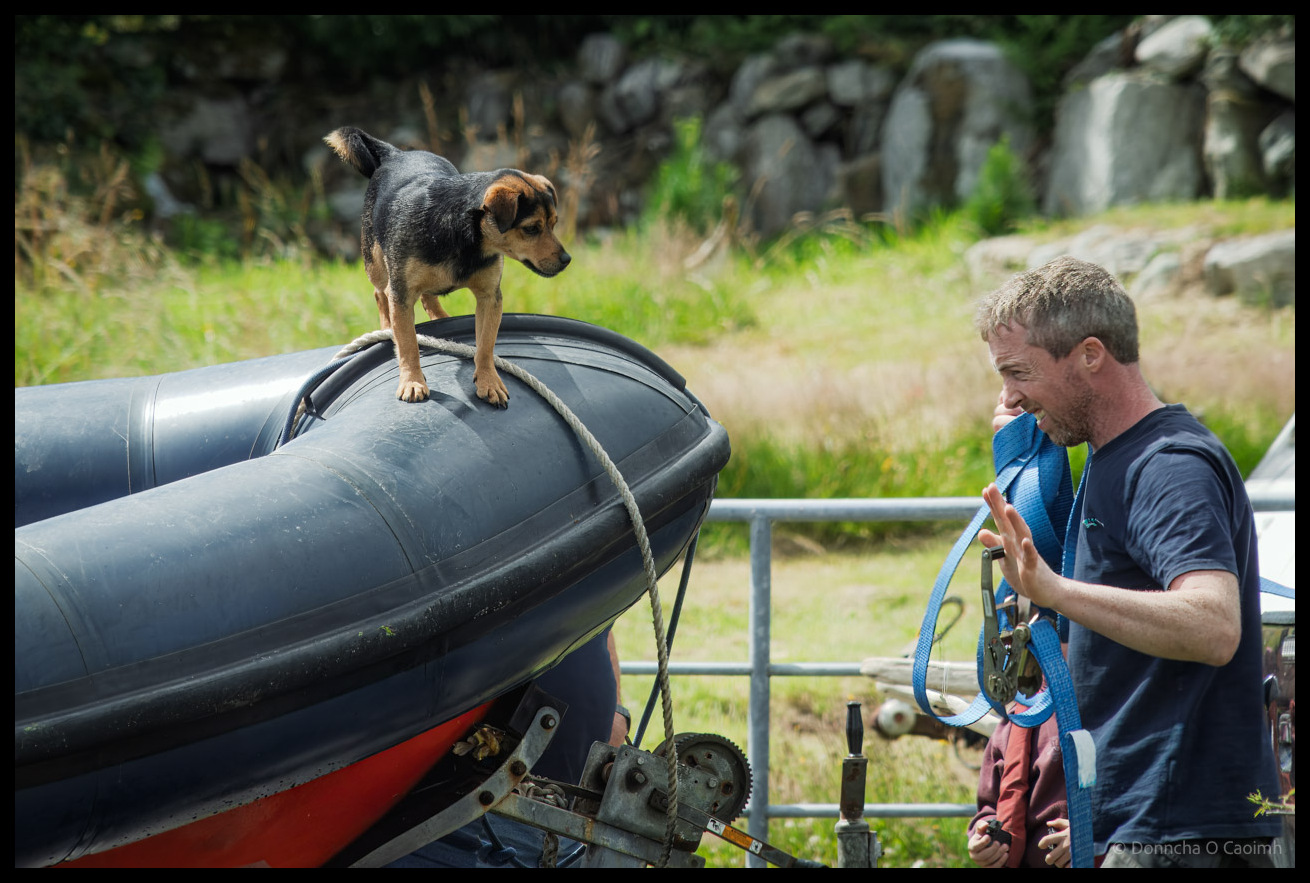
This little doggy was out with his family on the water off Sheep’s Head last July. It looked like they had lots of fun!
The Hi-B: Cork’s Phone-Free Pub Experience
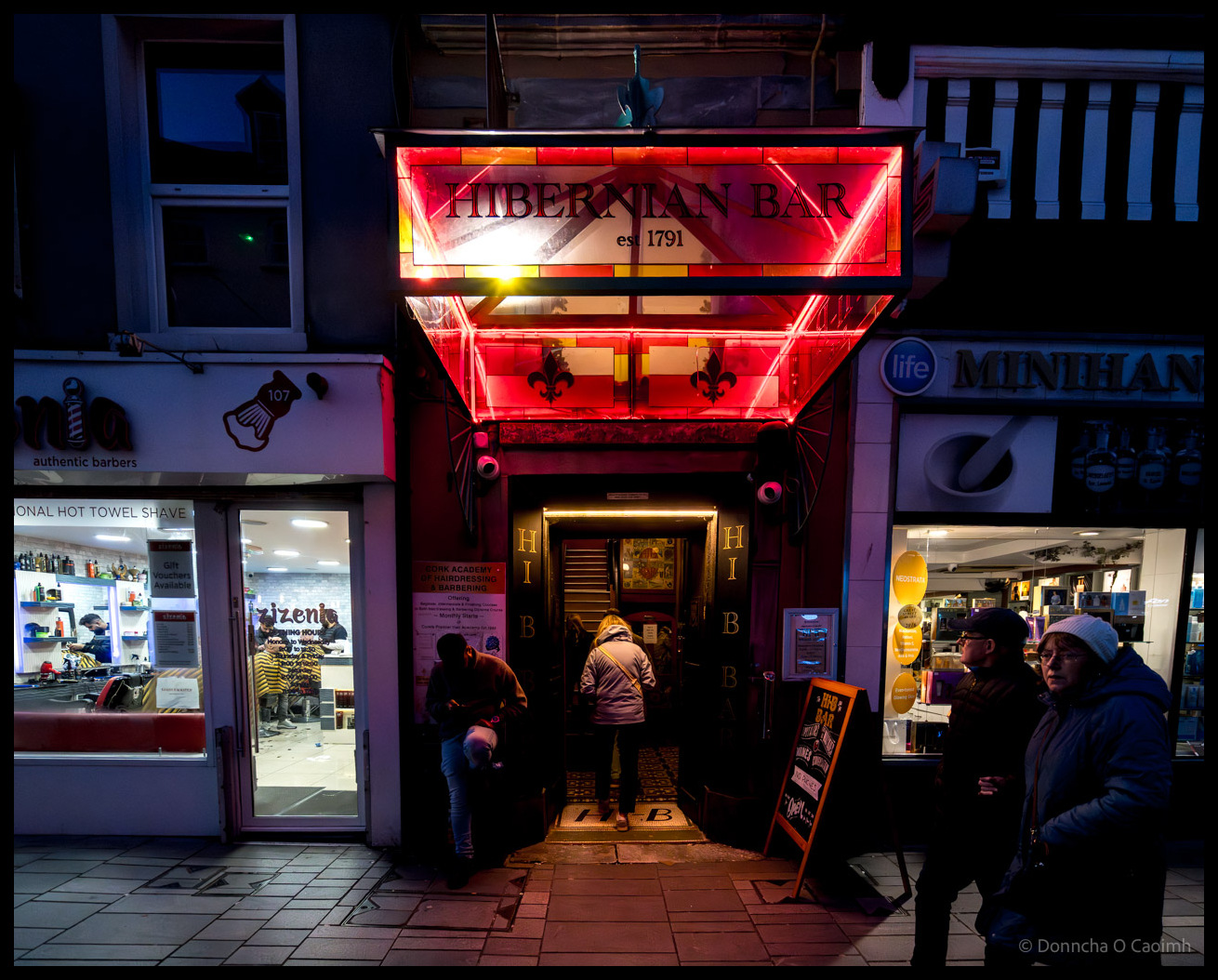
Right, so this is the Hi-B (short for Hibernian Bar), and it’s become genuinely famous for one simple rule: no mobile phones allowed inside. That glowing red and gold Art Deco-style entrance practically screams “we’re doing things our own way,” and the “est 1791” proudly displayed tells you this pub has survived long enough to…
The Jazz Festival Parade
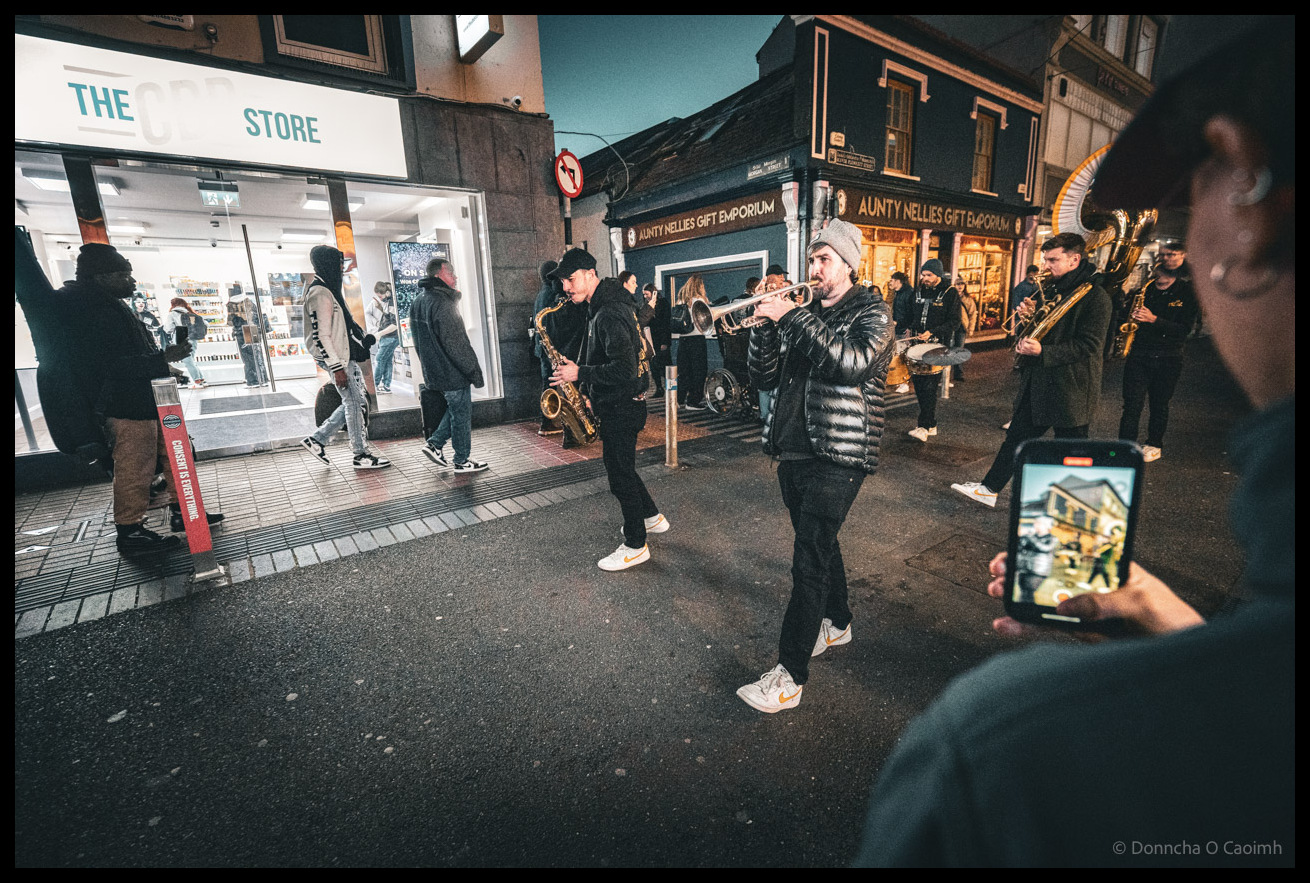
I did not know that there would be a small parade of brass bands down Oliver Plunkett Street until my wife was told about it an hour before! It was just after sunset and dark and getting cold but there was huge excitement as the crowd followed the musicians down the street.
TBL8 Brass Perform in Cork
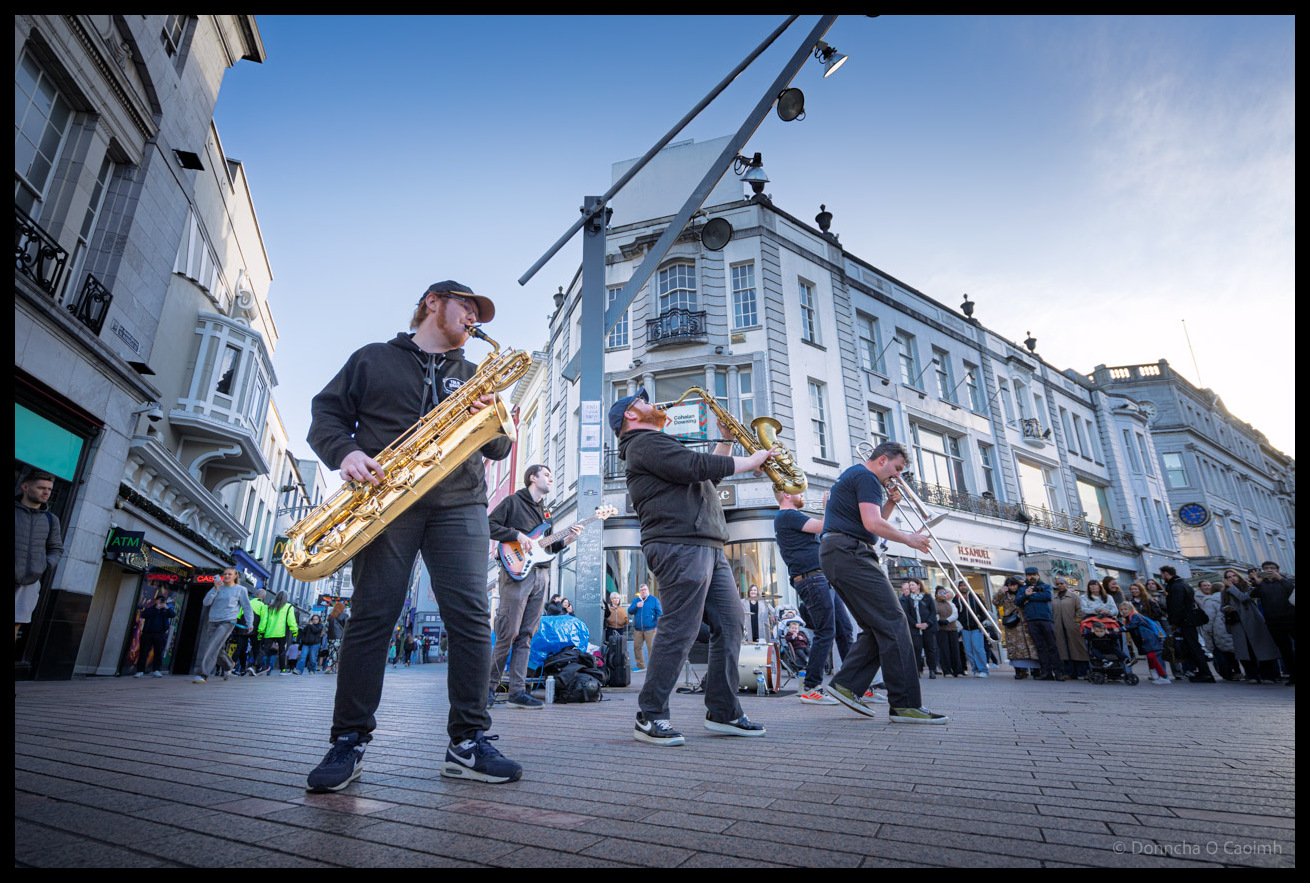
TBL8 Brass Band playing in Cork earlier this evening. They were so good. Blasting out the hits!
The Forest Guardian
Early Saturday morning a few weeks ago we gathered to photograph deer as the sun rose. Walking through the forest in Killarney National Park we spotted a group of deer. The light was terrible. I’m sure this was shot at ISO 12800 to get a crisp image and I’m really happy with it. This group…
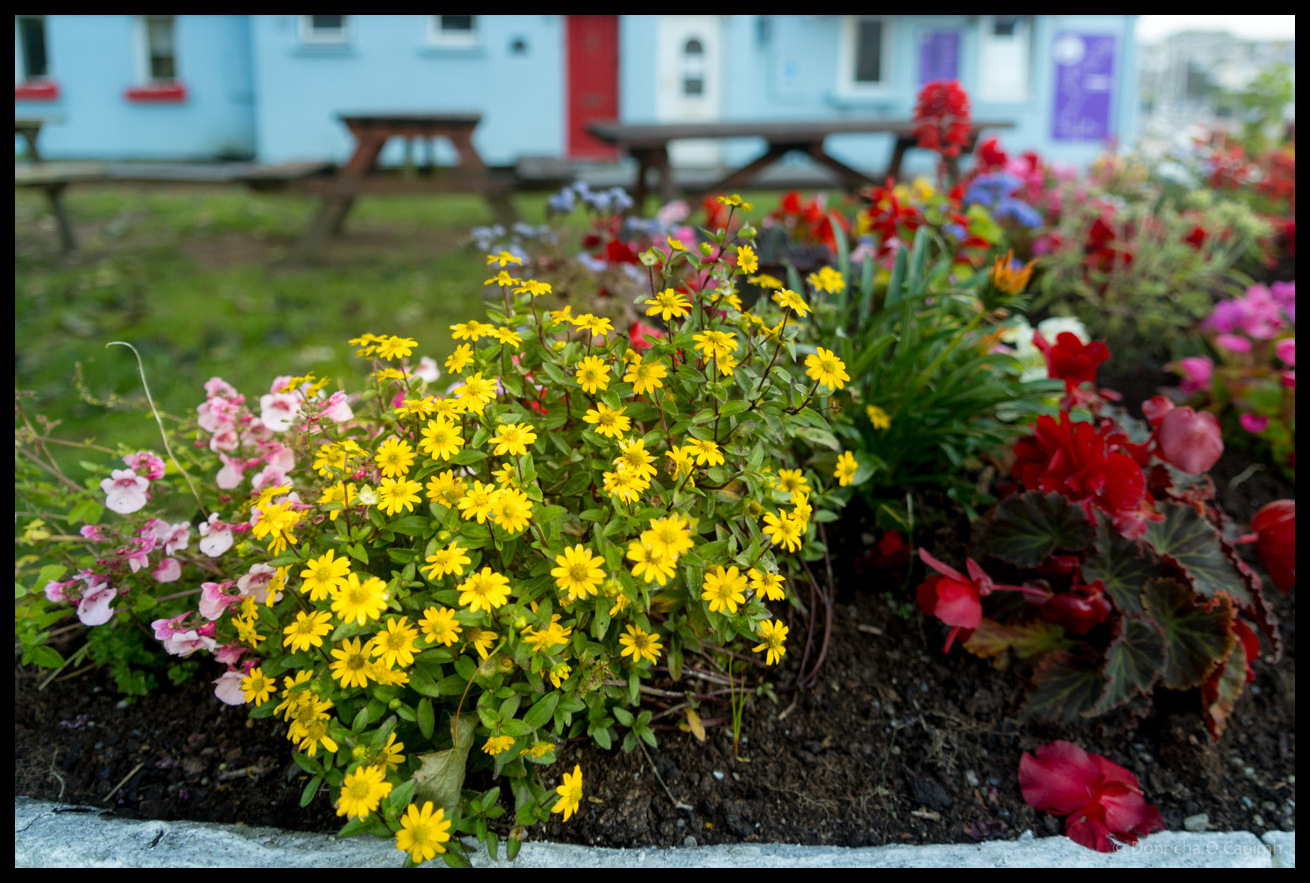
Kinsale in Full Bloom
Kinsale’s tidy towns group must work overtime and they do a fantastic job of keeping the town tidy and colourful. These flowers were in a small boat at the end of the quay and make the area look so pretty.
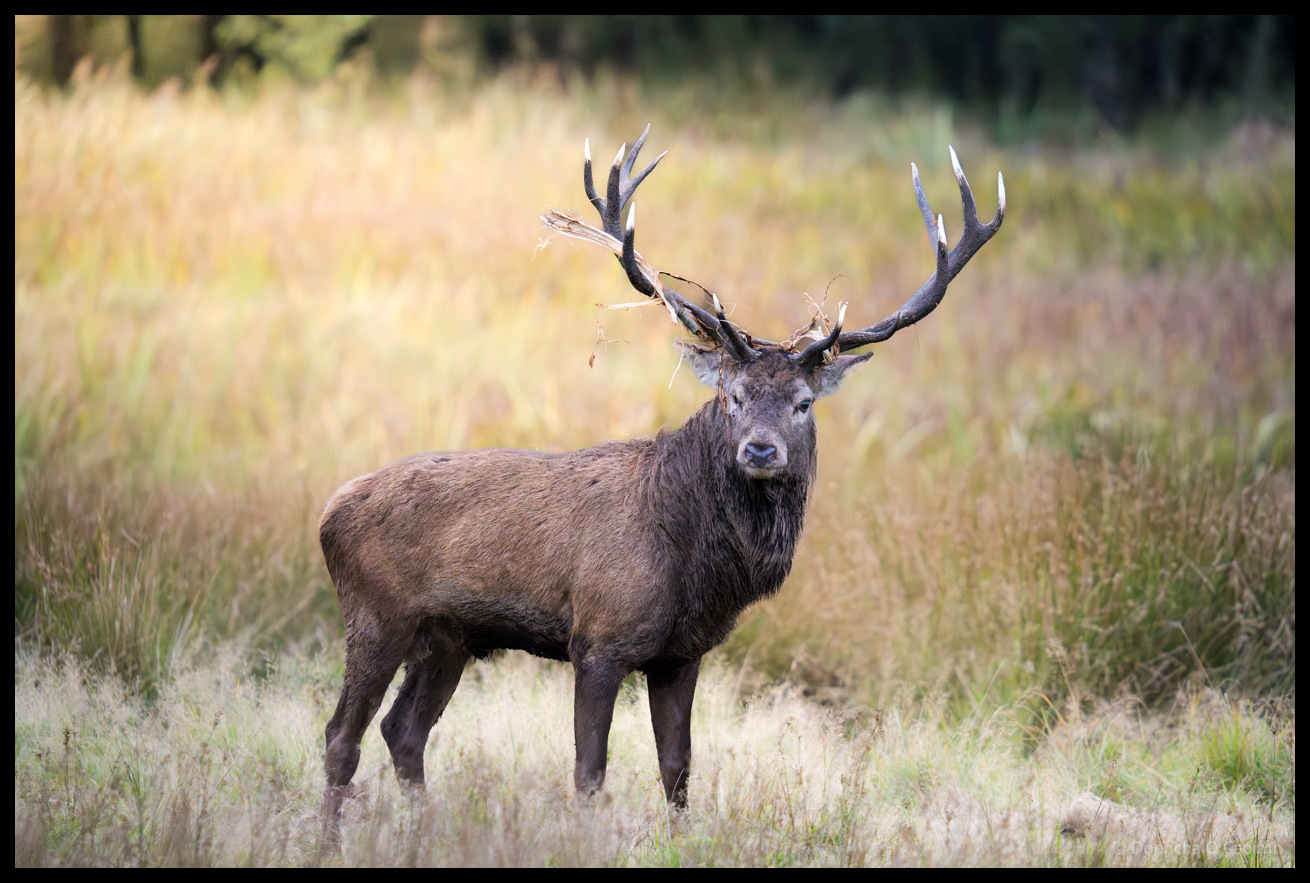
When Stags Find Their Voice
I travelled to Kerry this morning to photograph the rutting in Killarney National Park there. There weren’t many stags to be seen but this fellow was lying in the middle of a field I suspected would have a stag or two. After a few moments he stood up, digging his antlers in the grass and…
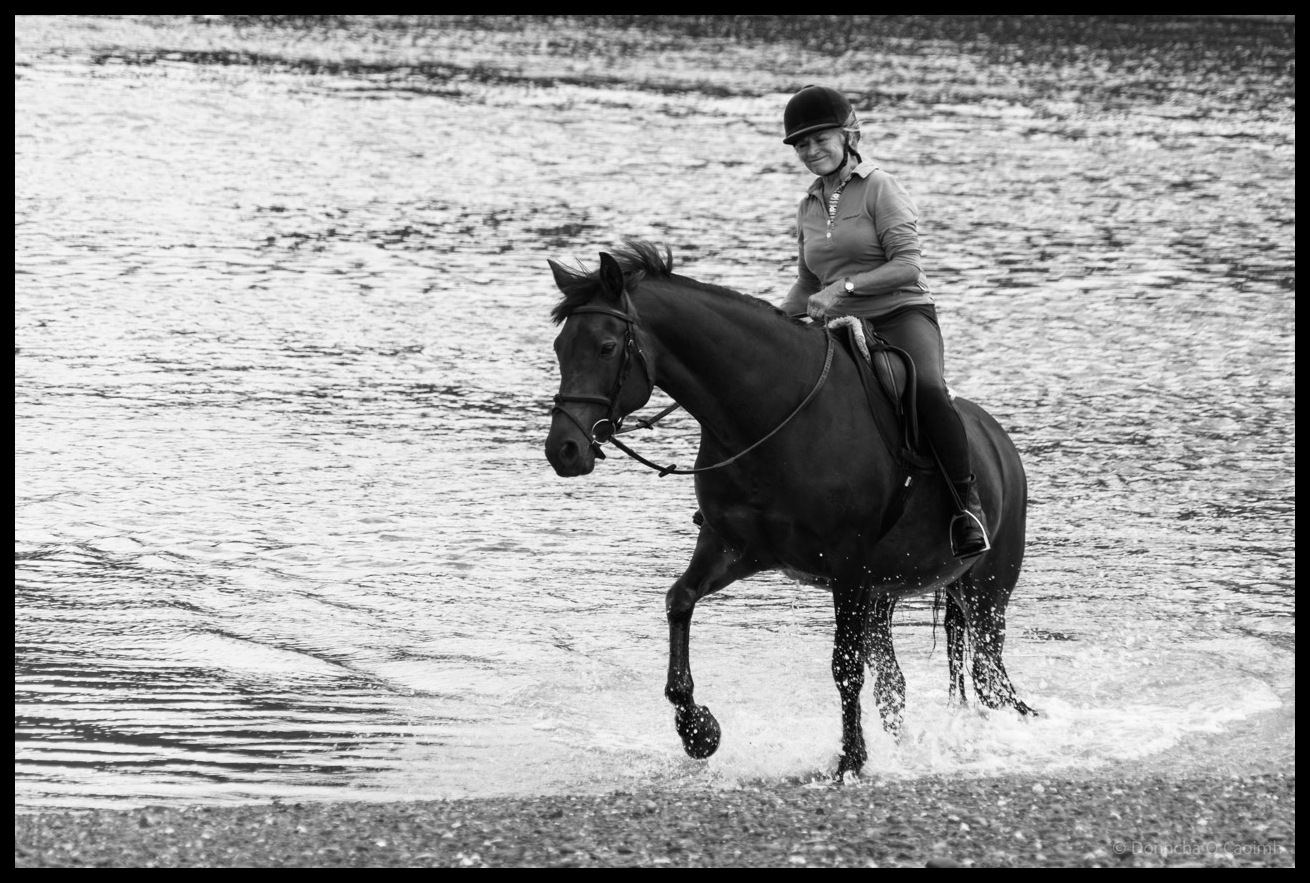
Horse Riding by the Surf
A horse and rider just after coming out of the water. They’d been wading through the water out further. Good exercise for the horse.